How to Feel Like You Belong
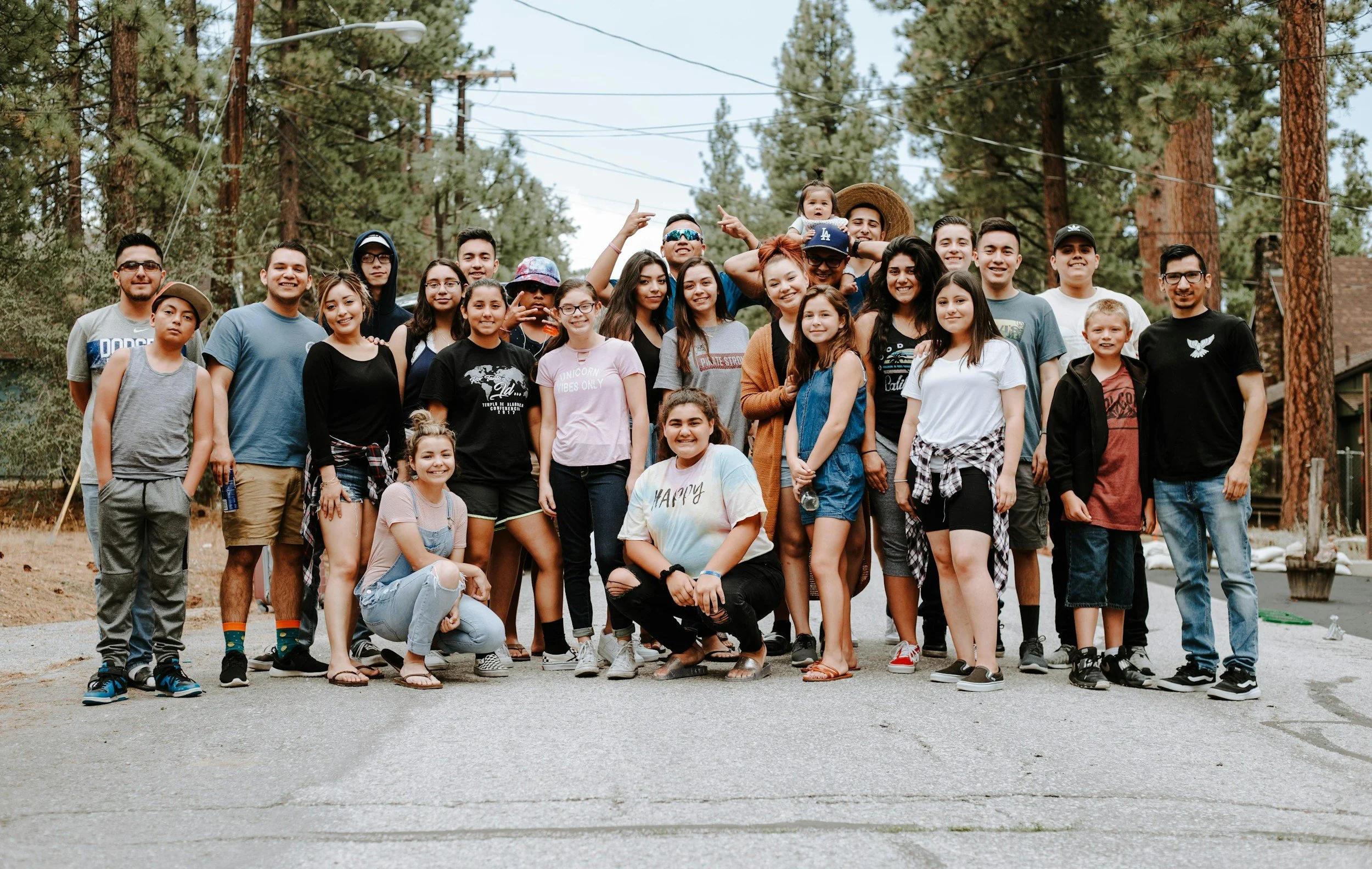
What is that thing that keeps you from feeling like you belong?
Most people have something.
In America, the majority of people these days report a feeling of non-belonging in the workplace (64%), the nation (67%), and their local community (74%). Whether this is related to personality, race/ethnicity, socioeconomic status, experiences during upbringing, perceived failures, culture, language, political affiliation, occupation, or something else, most of us feel like an outsider in some way.
In fact, half of Americans feel socially excluded - isolated from others, left out, and lacking companionship.
For many, this loneliness carries into the most intimate parts of our lives. Among Americans, 40% report a feeling of non-belonging in their families and 44% among their friends. And 17% report a feeling of non-belonging in all parts of their lives.
So feeling like a misfit is more of a norm than an exception. Could this be an invitation to think differently about belonging?
Maybe that “thing” that keeps you from belonging is what helps you belong. It’s the spice you add to the mix, the uniquely you thing that blends with other people’s uniqueness. When we all blend our flavors, the result is a delicious, decidedly not-boring dish. We need your [fill-in-the-blank non-belonging thing]. And the fact that most of us have a non-belonging thing means we all have that in common, and we belong to one another in that way.
In fact, the data shows that we are more likely to experience a sense of belonging when we have a diverse friend group. So hanging out with more people who are different than ourselves is one way to experience our own “differences” as a point of connection rather than exclusion. We are supposed to be different, and celebrating our diversity is a way to experience unity and cohesion.
The field of self-compassion has a term for this: Common Humanity. We can learn to see that our sufferings, mistakes, failures, hurts, and differences are what we all have in common as human beings. When we use our pain as an opportunity to turn toward other people instead of isolating ourselves, it eases our suffering by reminding us that we do, in fact, belong.
I wrote in my first book, The Mindful Christian, about my experience of “common humanity” during a season of multiple pregnancy losses. It was painful to feel a lack of belonging due to being childless and in a constant state of grieving. It seemed that everywhere I went, women without children were left out or “othered.” It was hard to make friends without a shared parenting experience, and other women’s chatter about their kids reminded me incessantly of my losses.
Then I stumbled upon a sentiment expressed by another woman who had experienced miscarriage - it is our losses that unite us as women.
This helped me reframe my exclusionary “thing” of pregnancy loss as something that actually helped me belong. I could turn toward other women and know whatever their life looked like on the outside, there was also some loss they were carrying in their heart. It may or may not be a similar loss to my own, but each of us has known loss in some way - a death, a broken relationship, a lost dream, a loss of functioning, a shattered belief, a breach of safety, a wounded self-concept. My loss doesn’t mean I don’t belong, it means I do belong.
I now know that the “non-belonging” of loss is part of my belonging to the human race. And this applies, also, to the many other ways I am tempted to perceive non-belonging for myself (which I will not bore you with by listing here).
So what is the thing that keeps you from feeling that you belong?
Maybe it’s time to offer that up as a normal part of the human experience, celebrating that your uniqueness is what makes you like the rest of us - each of us unique, each with our special spice to add to the mix.
You belong.
Sources:
The Belonging Barometer, Revised Edition (Over Zero & The American Immigration Council, 2024), thebelongingbarometer_revisededition_june2024_1.pdf
Stressed in America 2025: A Crisis of Connection (American Psychological Association, 2025), https://www.apa.org/pubs/reports/stress-in-america/2025

Hello, I’m Dr. Irene Kraegel!
As a clinical psychologist, I offer therapy for adults and teens at my in-person office in East Grand Rapids, MI, as well as virtually in 43 states (see list here).
Specialties include chronic pain and Christian faith integration (both Protestant and Catholic), and I work with many clients experiencing anxiety, depression, loneliness, and feelings of non-belonging.